Narrative Thoughts: Hades and Complicated Family Dynamics
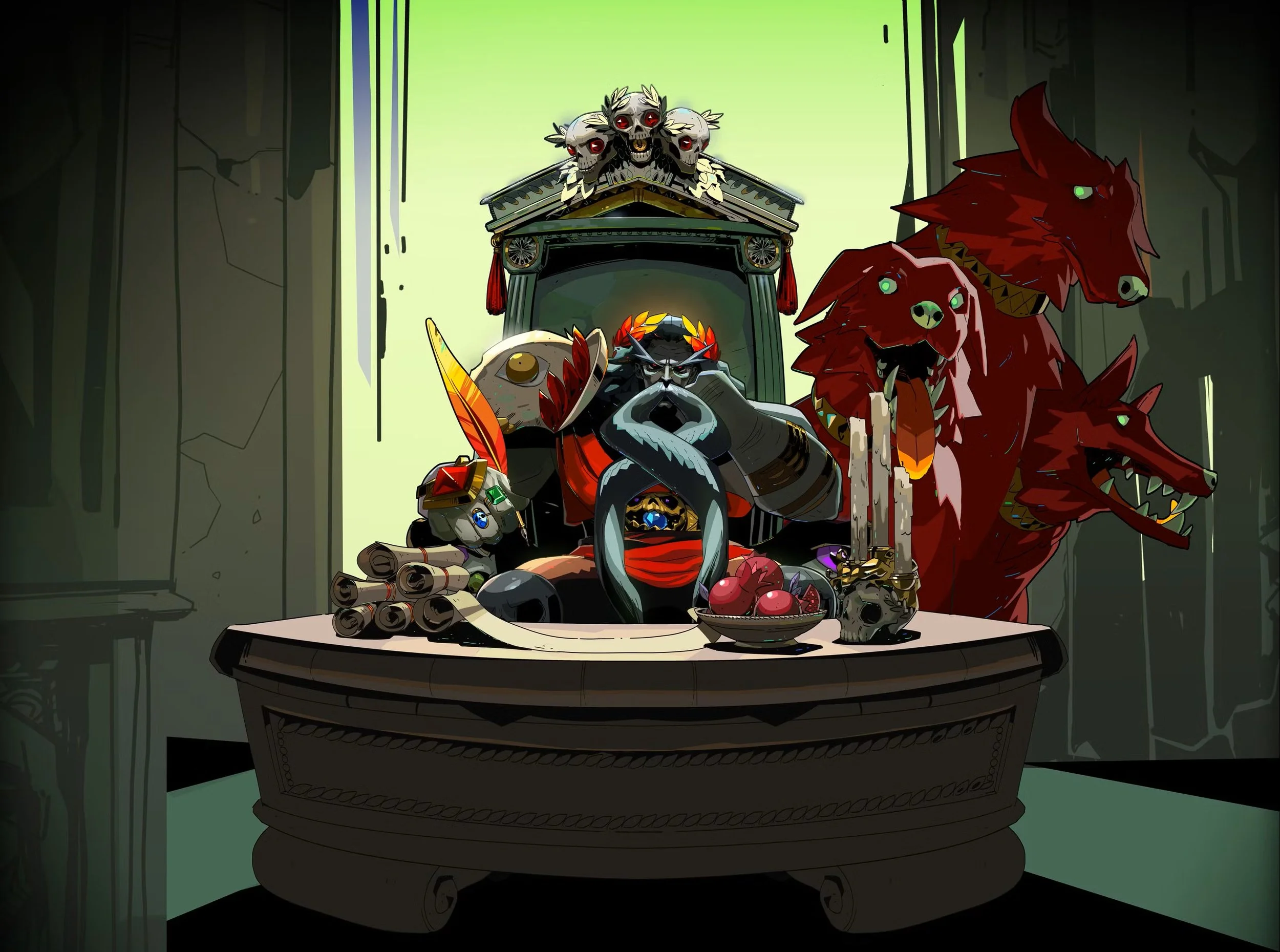
art source: https://www.dualshockers.com/the-art-of-hades/
I wound up writing about Supergiant Games’ Hades for an assignment and got irritated I couldn’t elaborate further about Hades and messy family dynamics and why I love the game for them. The assignment was to take a myth, idea, story—some artifact—that had multiple iterations and put several side-by-side. I picked Hades, mostly so I could talk about Hades.
In comparing Hades to his original mythic counterpart, however, I realized that Hades the game added a complex layer to the House of Hades (how many Hades can I put in a single sentence?) that contributes to my adoration of the game.
Hades remixes classic Greek myths (well, you know, Americanized editions of them) and turns them into a roguelike with a compelling narrative even after you die a lot. It’s also about Zagreus refusing to accept the status quo of his dysfunctional family. He breaks out of the underworld to find his mother, Persephone, and uncovers why she left through repeatedly defeating the man who drove her away: Hades, head of the House of Hades, Lord of the Underworld. Your father.
Maybe I just thrive on fictional drama, who can say? But that family messiness adds a layer of complication that both underlines what I loved about mythology as a kid—that compelling drama—and adds new, modern American family chaos (and Chaos) to it; now here was a Hades myth retelling with contemporary generational trauma I could relate to! And also amazingly attractive women like Meg. I have to confess, Hades II, I miss Meg so badly.
But this isn’t about Hades II. This is about family and being bound to people by blood and obligation.
I grew up in a family that valued hard work, being the best at what you could do, and not making a fuss over anything. Above all else, I was taught to never, ever question my mother or my aunts and uncles. My family is hardly unique. That’s how generational trauma seeps into the fabric of our cultural norms, through the things we don’t talk about, the ways we’re meant to act or the things we’re not meant to say too loudly.
Sometimes it all gets so overbearing you just want to smash it all and escape.
In that way, Zagreus offers catharsis in breaking out of the underworld, forcing everyone to change along with him. It’s doubly cathartic that his family listens to his desperate attempts to upend their dysfunctional norms. My family would never—many families would never. But by the end of the narrative, his father Hades doesn’t immediately change but he begins to try.
Now, if this were a real situation, obviously we’d tell Zagreus to leave and cut his family off. Hades is mean, belligerent, and condescending. Also, you know, physically fights him every time he tries to leave. Nyx, for all I adore her, defends Hades’s actions. She’s aloof and more focused on what you’re meant to do and fated obligations that must be fulfilled, regardless of her personal kind words and opinions. Neither are the best role models, though you can see both make attempts to love Zagreus amidst all the tension.
(We won’t even talk about Megaera or Thanatos, your love interests. They take their jobs too seriously and initially resent Zagreus for not doing that and for rattling everything around; they both reinforce unhealthy expectations, but they’re also hot so it’s fine.)
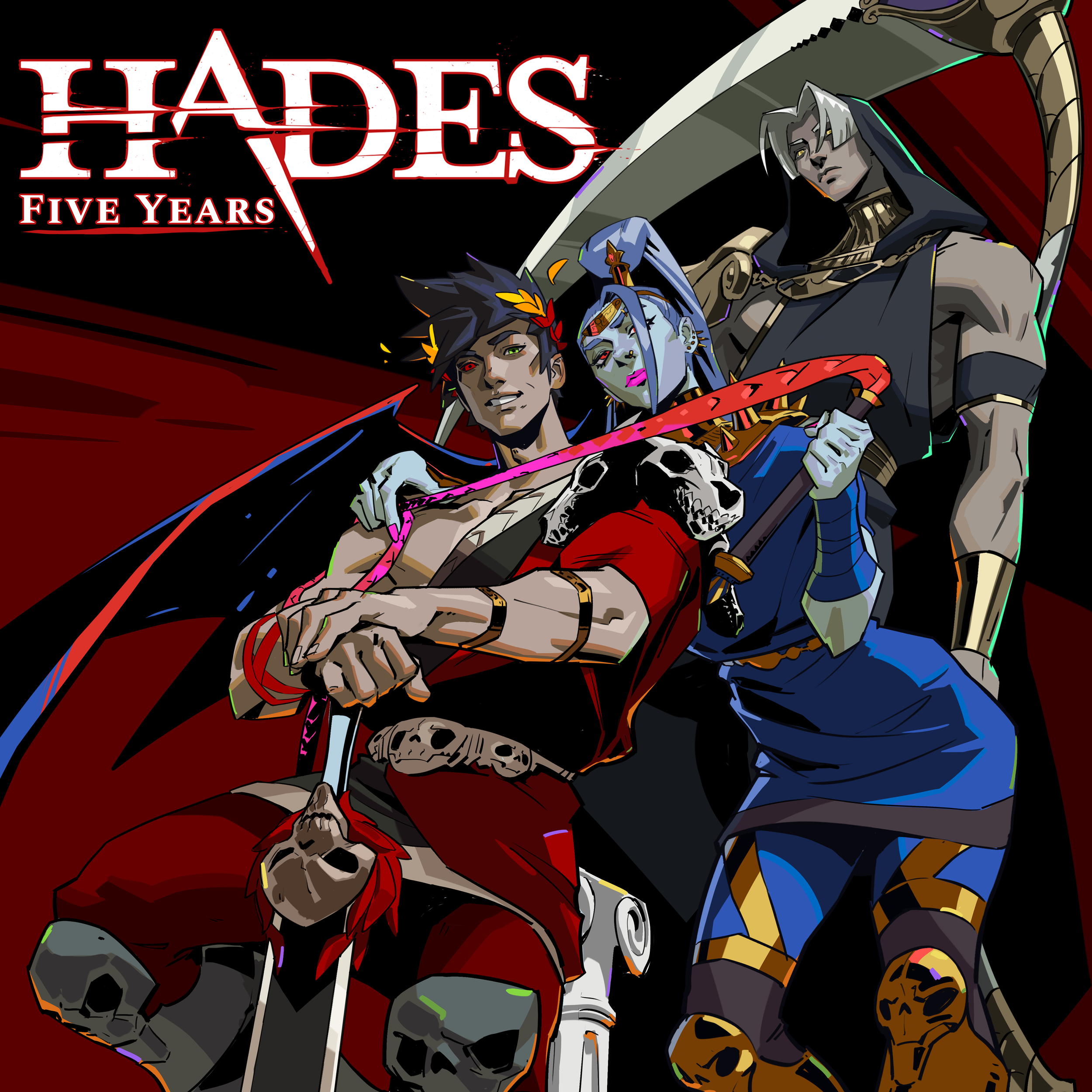
art source: https://www.supergiantgames.com/blog/hades-five-year-anniversary/; look how hot they are, just saying
But because this particular family is a bunch of hot immortal beings who can’t easily detach from each other—there is no escape from your role in the pantheon of gods, after all—it allows the story to focus on what happens if a broken family tries to fix things. And you, the player, get a little dopamine as a treat for beginning to mend the messy and frayed threads between each person.
That’s the power of fiction, of story and myth and retelling: catharsis and understanding. A fictional version of a headstrong, too-proud parent realizing the error of their ways and trying to change can soothe some aching part of you long scarred over.
It’s impressive, and a bit ironic, that the roguelike setup ultimately means the status quo can never fully, actually change.
There is no end run to the surface to permanently alter things, no finality. Every time you die, a little dour chord plays. Zagreus falls into blood and there is no escape unfurls across the top of the screen. Likewise when you win, defeating Hades perhaps yet again, the result is the same. There is no escape. Zagreus will never fully escape in Hades from the cycle he’s trapped in with his family, with Hades.
But things do change. Nothing is static.
Zagreus might have no true escape from family, from blood, but he can certainly shift the dynamic. We can also try to shift dynamics. We can try to leave, we can scream, we can fight through room after room with our feet covered in lava because we keep stepping in it—hmm. That got away from me.
Zagreus defying his father and trying to right past wrongs might not break the core game loop, but it does shift elements in the House of Hades itself, as well as dialogue not just with Hades but with everyone. Even after Hades has been out for over 5 years, I’m still in awe of the attention to detail. If Hades kicks your ass and Zagreus loses the final fight, he comments on it when I get back to the House, and so on.
Father and son will never have a fully functional relationship. There will always be scars and sore spots, tempers that flare here and there—they’re both a bit arrogant, let’s be honest.
But once you beat the game and roll the credits, some aspects shift. Persephone comes home. There isn’t any of the original myth’s sexual assault elements in this version of Hades and Persephone’s relationship, rather Persephone ran down to Hades to avoid her complicated relationship with her mother, Demeter, and the other gods. On every level, this family doesn’t know how to balance support with expectation. On every level, this story is about connection and family. (… please envision the Vin Diesel Fast and Furious gif here, it’s fine).
How many families are like that? Well, don’t worry, these gods are too. Because, much like people, gods are fickle, proud, and would rather smite each other than confess wrongdoing. They can also occasionally give praise (if you perform well), smile at you, and help you (fulfill a task). Just like my family, maybe yours too. It’s complicated. That’s okay, go try to escape the underworld and step on a trap.
Now that I’m pondering it, there’s a whole other Narrative Thought I could get into about how found families can also sometimes play out these complicated relationships, or maybe how all the other characters like Dusa, Thanatos, and Megaera, all navigate the dynamics, and—
*gets dragged off stage*
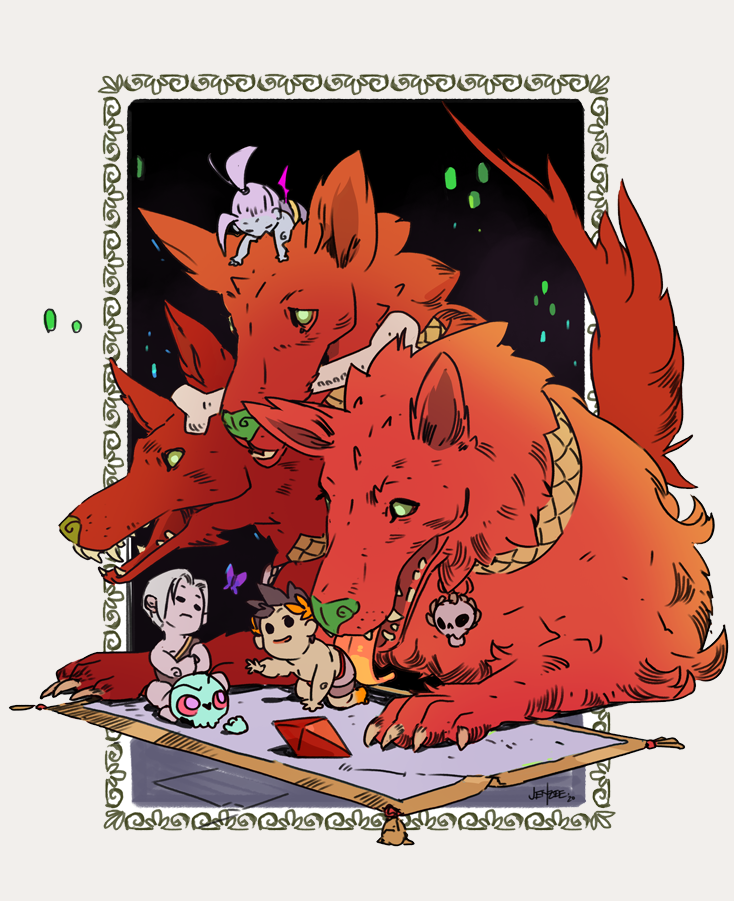
art source: https://www.supergiantgames.com/blog/hades-now-out-of-early-access/; look at these adorable babies~
Life isn’t as clear-cut as a video game, but sometimes change and communicating with relatives does involve proverbially smashing doors down and breaking out. Maybe, if we’re lucky, our family will listen—grudgingly, slowly, or maybe quickly if we’re luckier still.
That core catharsis in Hades, on top of the cathartic gameplay loop, is what makes the game so enduringly good even after all this time. Because while things are cyclical, every now and again, those cycles change and spiral into something new.
There is no escape, though. In the end, maybe that’s the best metaphor for life. We all bleed and are stuck in complicated relationships, platonic and romantic and familial, but that doesn’t mean we can’t be ourselves and find new ways to exist that better suit us if we’re unhappy.
The good thing about life? Blood isn’t everything. Be yourself.
There will likely be a Part 2 to this eventually, on Melinoe and her people pleasing ways in Hades II and how the game both complements these things and contrasts Hades and Zagreus’s narrative arc (Mel is such a little rule-follower compared to her brother, etc.).
But in the meantime: go play Hades! It’s still such a brilliant game.
PS: in all these years, despite adoring Hades and playing it all the way through on Twitch way back when, I have never written about it like this before! So thank you to my assignment for finally giving me the nudge.
I hope you enjoyed reading this! In an effort to let myself write about topics that interest me, I’ve finally been putting down more Narrative Thoughts about games, movies, television, and other media that compel me to ramble about story. Most times it’s games, but that deviates from time to time.
If you want to support me or have a discussion about this piece, you can do so on my Patreon! I use this as a way to moderate comments because I’m chronically ill and fatigued and public online comments bring me fear.